
Nurses "Already Make Enough." Here's the problem with that.
May 12, 2026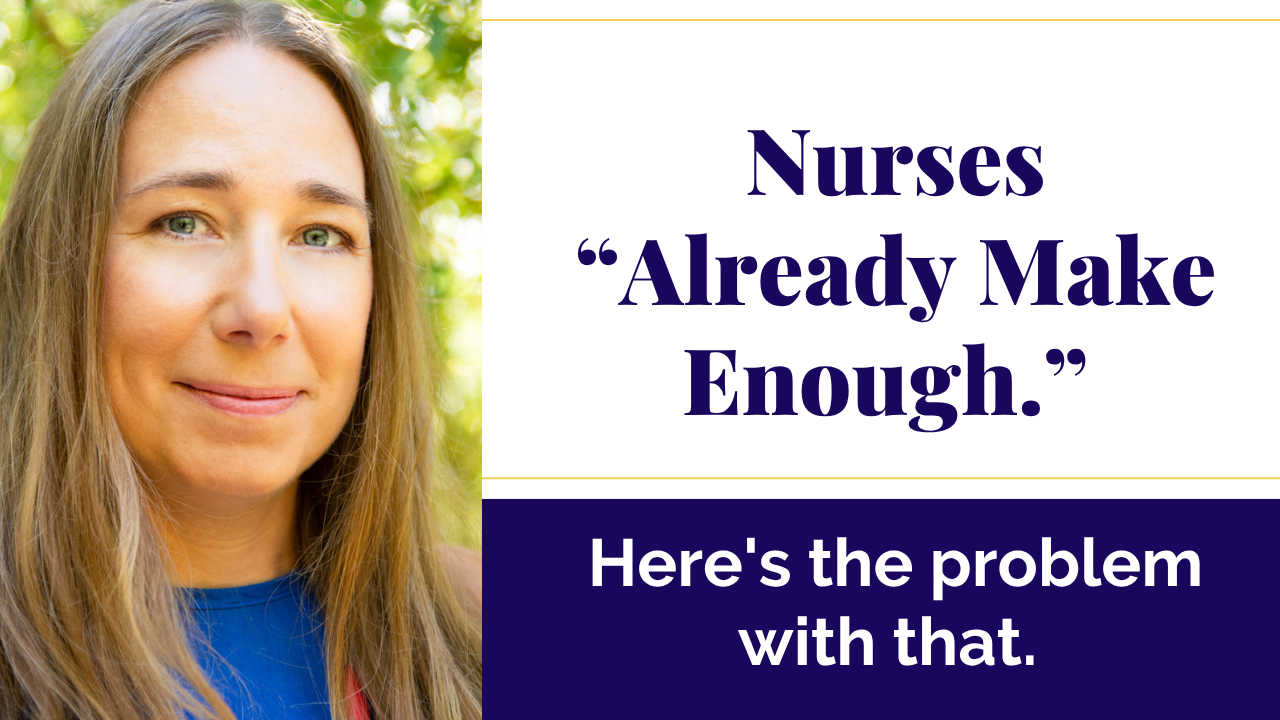
I knew the nurses in my clinic deserved a raise
I’d been advocating for a raise for nurse practitioners in my clinic for years, and it all came to a head in a meeting that had been keeping me up at night for weeks.
Two minutes in, my medical director looked me in the eye and said, "You already make enough. What more do you want?"
He didn't look at the folder I had brought — salary data, regional comparisons, a prepared case about the financial value nurses brought to the clinic. He didn’t even pretend to listen. His legs were crossed, his fingers interlaced behind his head. He walked out of the meeting before I could respond.
I sat there, folder on the table, feeling humiliated. I tried not to cry until I clocked out that evening.
I had done everything right. Contributed to research published in JAMA. Served as president of a major nursing association. Advocated for safe staffing in my state legislature. I got the right credentials, I worked unpaid hours, and I had the data to back up my argument.
None of it mattered to the people who made the decisions.
That same year, the leaders of that organization gave themselves a 10% raise. They called the 1% they gave the staff "generous." That 1% didn't even cover the increase in my medical insurance premium.
That experience forced me to sit with a question that all nurses need to ask:
Why was I letting that man decide what I was worth?
The real data about nursing salaries
Both of the following things are true, according to academic research:
- Nurses are underpaid and undervalued in relation to the contributions they make to their organizations.
- Registered nurses are among the highest-paid hourly workers in North America.
A nurse in the US or Canada typically sits in the top 10–20% of earners in her community. Top 5% in the world.
I know that's uncomfortable to read, especially when your paycheck doesn't feel like it’s covering your expenses.
And I know it doesn’t feel fair, when you know that healthcare organizations have distributed trillions of dollars to shareholders and administrators in the last two decades alone.
But it’s worth feeling that discomfort, because it shows that you have real power as a nurse.
Even if we are underpaid in relation to our contributions (and we ARE!), it illustrates that most nurses do “make enough” income to build the lives we want. We don’t have to let our employers define our value.
The problem is that nurses have never been taught what to do with that income.
Here's one small illustration: a nurse earning $90,000 a year earns approximately $3.8 million over a 40-year career. $3.8 million sounds like a lot, but a 2025 Fidelity study found the average nurse retires with less than a tenth of that saved — roughly $370,000.
The rest is lost to life expenses, fees, inflation, and compound interest she never collected. She worked hard to earn that money, but she missed out on her biggest money making opportunities through learning to invest on her own as a nurse.
So, regardless of what we make, as nurses we live paycheck to paycheck. We feel stuck. We constantly feel like we’re at the mercy of our employers’ budgeting decisions.
Yes, nurses are underpaid. Also, we have the potential to turn our paychecks into more without working more.
What I did instead of looking for a better employer
After that meeting, my first instinct was to find a new job. A better employer who would pay me what I was worth.
But when I thought about it, I didn’t want to look for a different job. And I knew it wouldn’t change things. I’d still be at the mercy of a system that undervalues nurses’ contributions.
So instead of continuing to fight with my boss about a raise, or quit and find a better job, I did something different.
I built and tested my own money system using my nursing salary. I learned to invest. I built a simple tool that helped me put every dollar in my paycheck into a place where I’d get the most out of it.
It took a lot of refinement, trial, and adjustment, but after six years, I had $100,000 invested and was nearly debt free. My pay had barely moved, but I’d changed what I was doing with it.
The numbers continued to go up. Within a few years I had enough freedom to take a five year break from nursing. I hiked the Pacific Crest Trail. I learned Spanish in Guatemala. I spent six weeks traveling in New Zealand and New Caledonia. I bought my home in cash.
Eventually I came back to nursing. I worked about ten hours a week, by choice. My investment returns were already paying me more each year than my NP salary ever had.
How a financial foundation makes you a more effective nurse
When I came back, I walked into the same old corporate medicine problems. A colleague tried to bully me. Managers pushed us to take on more patients than we could safely manage, which led to charting and patient care errors (which were of course blamed on nurses). We were directed to chart outside of our paid hours. Administrators threatened a mass layoff. (And that was before COVID hit.)
This time, though, I felt different.
I confronted the bullying directly. I got active with my union. I identified how patient load and technology problems had contributed to errors. I never worked for free.
I told my manager: if this continued, I wasn't going to keep working there. I was showing up as a gift. I knew the organization needed me more than I needed them.
And you know what? To their credit, this time my manager intervened on nurses’ behalf. Things did get better.
In the end, that’s what this story is about:
That's what getting your money right does for a nurse.
It isn’t just about having more in your bank account. It gives you control inside the system, regardless of whether or not the system values you appropriately.
Declining the unsafe assignment feels different when you can say no without worrying about retaliation.
The PTO request feels different when you can take the time off regardless of whether it's approved.
The write-up feels different when you know your rent is paid whether or not you keep this job.
And managers respond differently when they understand that you’re prepared to walk away from your job.
None of that is about earning more. All of it is about what you do with what you earn.
One nurse's financial independence is another nurse's power
As individual nurses, we can’t control whether our employer values us appropriately–financially or personally. That’s why it’s important to control the things you can control.
The #1 thing you can control is your own financial strategy to make sure that you're paying yourself the most.
And that gives us leverage.
Nurses Investing For Wealth® was built around this mantra:
One nurse's financial independence is another nurse's power.
Because when even one nurse on your unit stops needing their paycheck the way they used to, every nurse around them gets stronger. You can advocate for patients. You can strike. You can refuse unsafe scheduling assignments. You can confront toxic unit culture and bullies.
My experience showed me that you don’t have to get a raise or find a different employer.
You just have to figure out how to get the most out of the paycheck you already have.
If you want to learn how to invest on your own as a nurse and fund your future with small portions of your paycheck so you can work less if you want to — that's what you get in Ultimate Nurse Investing, the first State Board of Nursing–approved CE investing program in the US and Canada.
For the first step, watch this free training that will show you three essential money skills that allow nurses to become work optional.
Or send me a message. Tell me where you are right now, and I'll tell you what would help you move forward the fastest.
Angel Mathis, MN, MPH, ARNP, RN, FNP-Bc Founder, Nurses Investing For Wealth LLC
💻 Free, On Demand, Video Training
Fellow Nurses: How to Become Work Optional in One Hour a Month–Without Burning Out, Wasting Time on One-Size-Fits All Finance Strategies, or Falling for Bogus Investment Ploys
